
Begin with the demand
Choose one or two loads you actually need, such as a work light or a device charger. Read their labels and manuals for power requirements, and record roughly how long you expect to use each one. Include whether the device needs USB, another low-voltage supply or an AC outlet; these are not interchangeable.
Energy use is power multiplied by operating time: watts multiplied by hours gives watt-hours. Treat this as a planning estimate, not a promise of runtime. Conversion losses, standby consumption and starting loads can matter, so ask the equipment manufacturer how those demands fit its product specifications.
Understand the whole system
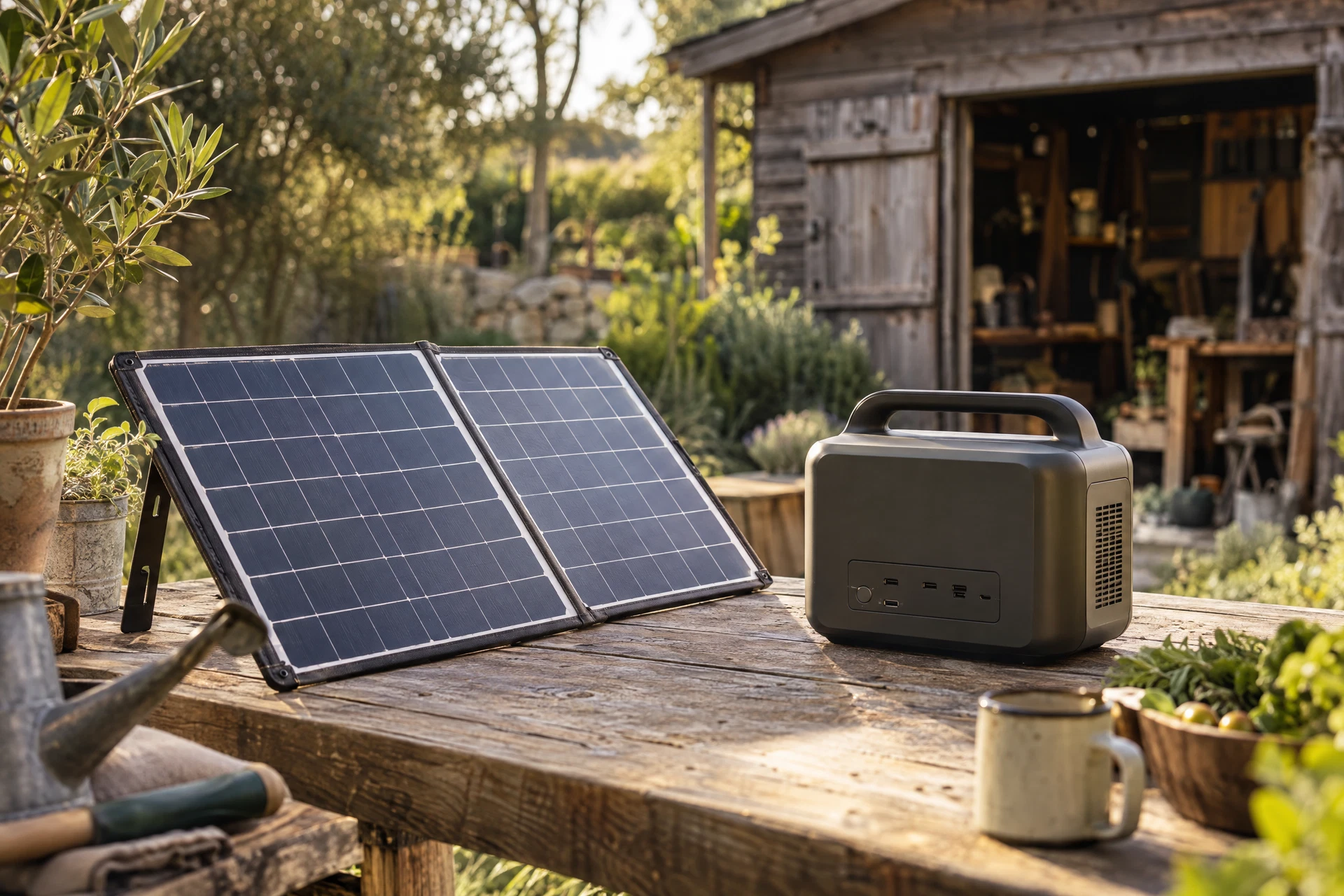
A panel collects energy, a controller manages charging, and storage makes energy available later. Some commercial portable power stations bring charging controls and enclosed storage into one product. An inverter may supply AC power, but it also introduces limits and losses. Buy for your chosen use, rather than for the largest number on the box.
A connector that fits does not establish compatibility. Check the manufacturer’s approved panel options, input voltage and current limits, cable requirements, environmental ratings and operating temperatures. If compatibility is unclear, get a written answer from the manufacturer rather than experimenting.
Plan for the place and the weather
Look at the proposed location at several times of day. Nearby buildings, trees and seasonal changes can shade a panel. Clouds and shorter days change available energy too, so a panel’s rated output is not a dependable daily supply figure.
Keep equipment within its stated environmental limits and provide the ventilation its manual requires. Plan stable manufacturer-approved panel support, protected cable routes and a dry location where required. A roof, fixed outdoor mounting or permanent cabling brings additional hazards and local requirements; that is a job to discuss with an installer.
Make a small, reviewable first step
Write a one-page brief: the intended loads, expected operating hours, location, approved components and what you will do when there is not enough sunlight. Include a realistic backup option. Compare complete compatible systems, not just panel prices.
After purchasing, follow the manufacturer’s setup and operating instructions and use the equipment only for the planned loads. Observe actual charging and use under different conditions before expanding. If it falls short, revisit demand and placement first; do not bypass limits or add unapproved batteries or adapters.