
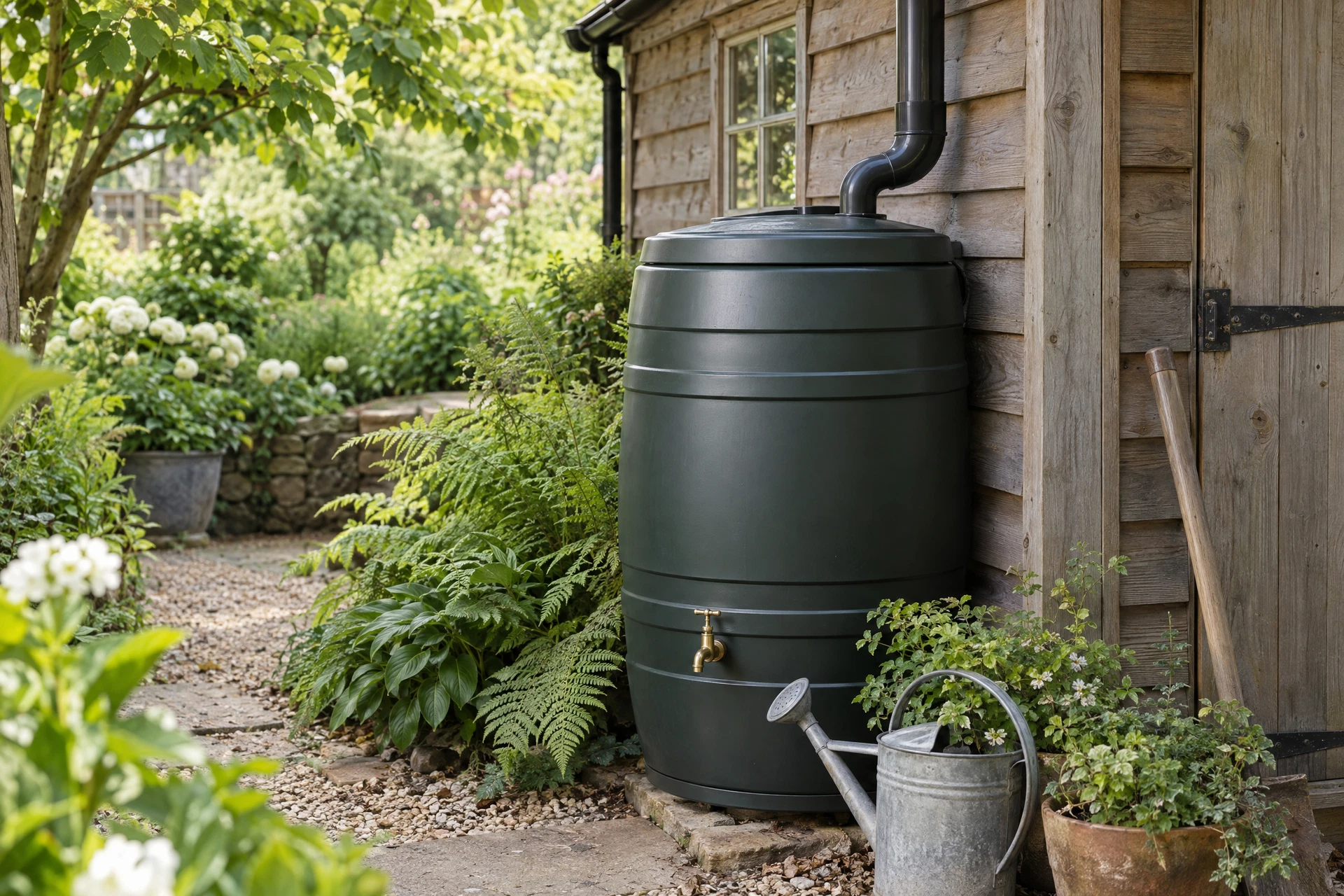
Choose the use before the barrel
Start with a modest non-potable use, such as watering ornamental plants. Think about how you will reach the garden and whether you will fill a watering can or use equipment specifically intended for your barrel. Check local guidance before using roof runoff around edible crops.
Walk the route from roof to gutter to downspout. Roofing materials, coatings, debris and nearby contamination can affect suitability. If the collection surface is uncertain, seek local advice rather than assuming a filter makes the water safe.
Keep the container closed and stable
Choose a purpose-made barrel with a secure lid and screens designed to keep insects out at collection and vent openings. Do not repurpose a container that held chemicals or leave an open tub beneath a downspout. Screens and lids need regular inspection; a small gap can defeat their purpose.
A filled barrel is heavy. Plan a level, load-appropriate base using the manufacturer’s instructions, and keep access clear. Do not improvise a tall stand to gain pressure. Consider children, pets and the possibility of tipping when selecting the location and securing the system.
Give overflow a safe destination
A barrel can fill during a storm, so overflow is part of the initial plan, not a later addition. Preserve effective roof drainage and use the manufacturer’s approved diverter or overflow arrangement. Route excess water away from foundations, paths and neighboring property to a destination permitted locally.
Check collection rules, drainage requirements and any restrictions that apply to your property. Never connect a rain barrel to drinking-water plumbing or attach equipment in a way that could allow backflow. Ask a qualified professional about any plumbing connection or drainage change you cannot confidently assess.
Plan care, not just collection
Include routine checks for blocked gutters, damaged screens, leaks, stagnant water and a clear overflow route. Follow the barrel manufacturer’s cleaning and seasonal storage instructions, including freeze protection where relevant. Label the water as non-potable so its intended use stays clear.
Rain collection and atmospheric water generation are different ideas. Collecting rain uses rainfall that has already reached your roof; extracting moisture from air requires energy and depends strongly on site conditions such as temperature and humidity. Atmospheric water generation is not magic free water, and it needs its own careful assessment.